The Thing
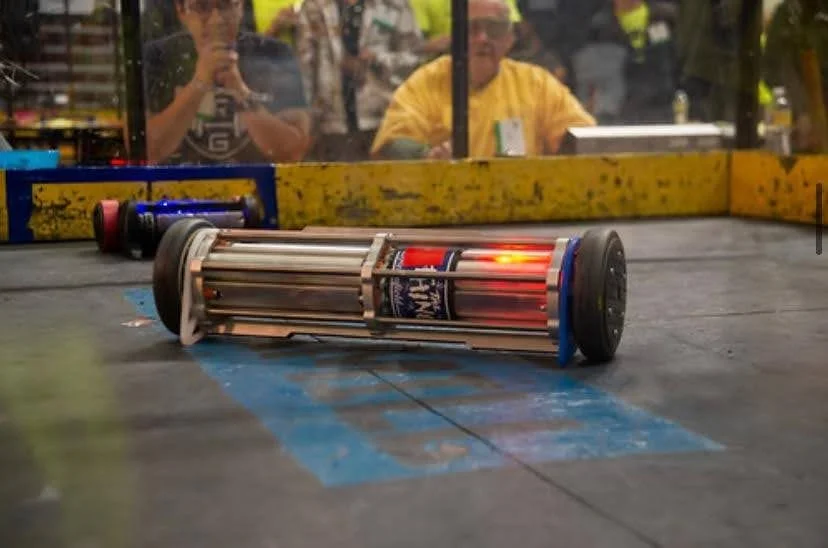
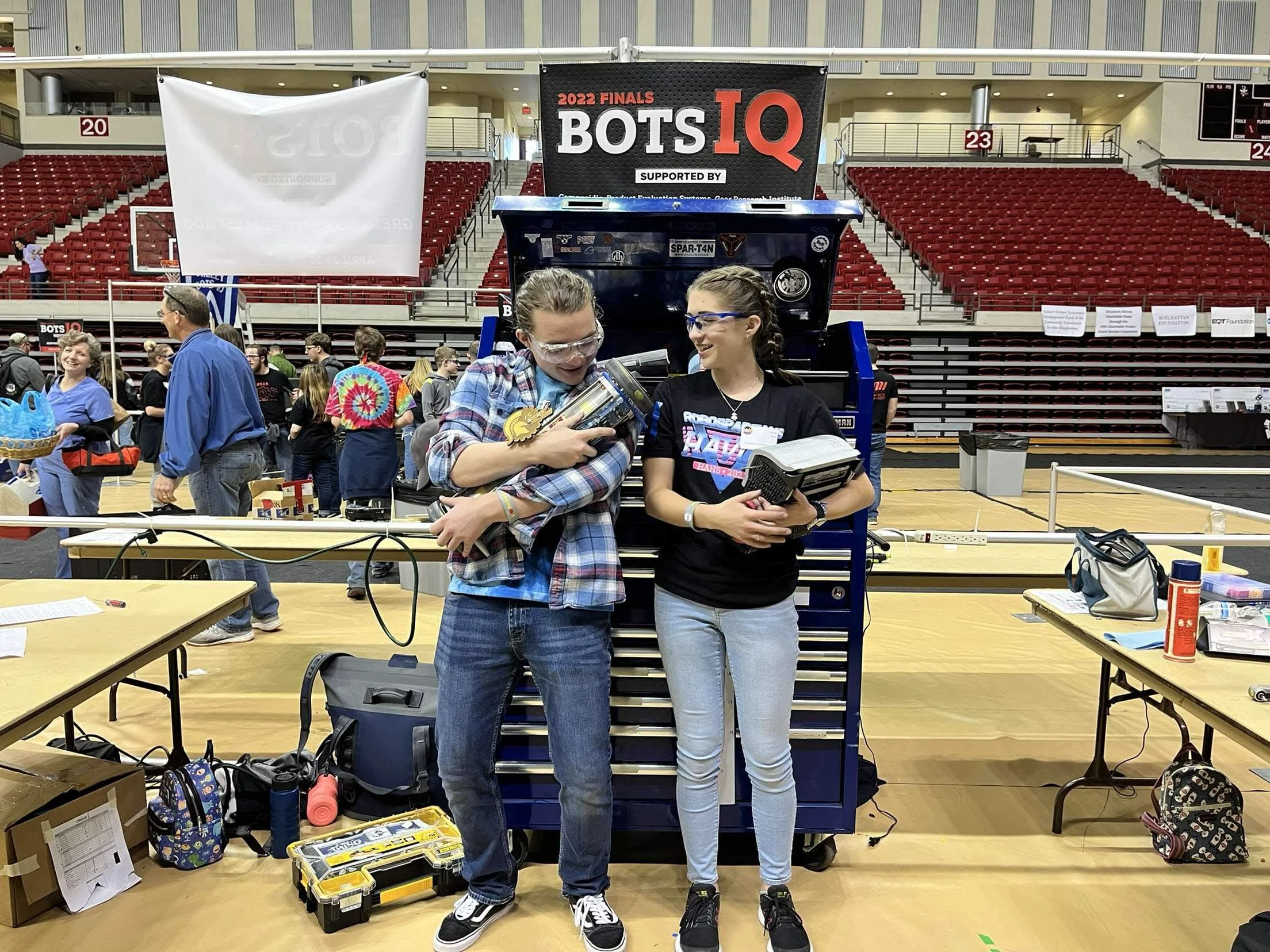
Here’s The Thing, a 15lb battle bot I built as president and lead designer of my high school’s combat robotics team for the 2022 season.
Some Context
My high school had a combat robotics team, which competed in Bots-IQ. This competition was primarily a workforce force development program sponsored by the Pittsburgh chapter of the National Tooling and Machining Foundation. It fed into a larger competition National Robotics League, which was run by the National Tooling & Machining Association.
The central idea of Bots-IQ was to teach high school students about engineering and manufacturing, by having them partner with a sponsor company to create the bot. This typically took the form of students designing the bots and the machining companies manufacturing parts.
Bots had to pass a number of inspections, and comply with a set of safety regulations. Along with the bot, teams had to submit a binder of technical documents including part drawings, explanations of systems, a bill of materials, and accounting information.
This year was unique as my school was running both a junior and senior team. This was a result of covid impacting the competition the year. The goal was to allow the younger members to gain the skills and experience they would have otherwise missed out on.
What made The Thing different?
Typically, in this competition, bots are either “wedge bots” which hope to pin their opponent, or weaponized which have some active weapon to physically damage their opponents. Weaponized bots come in a number of different forms, with the most common being vertical and horizontal spinners. These bots spin a large piece of metal very quickly and use it to strike their opponent.
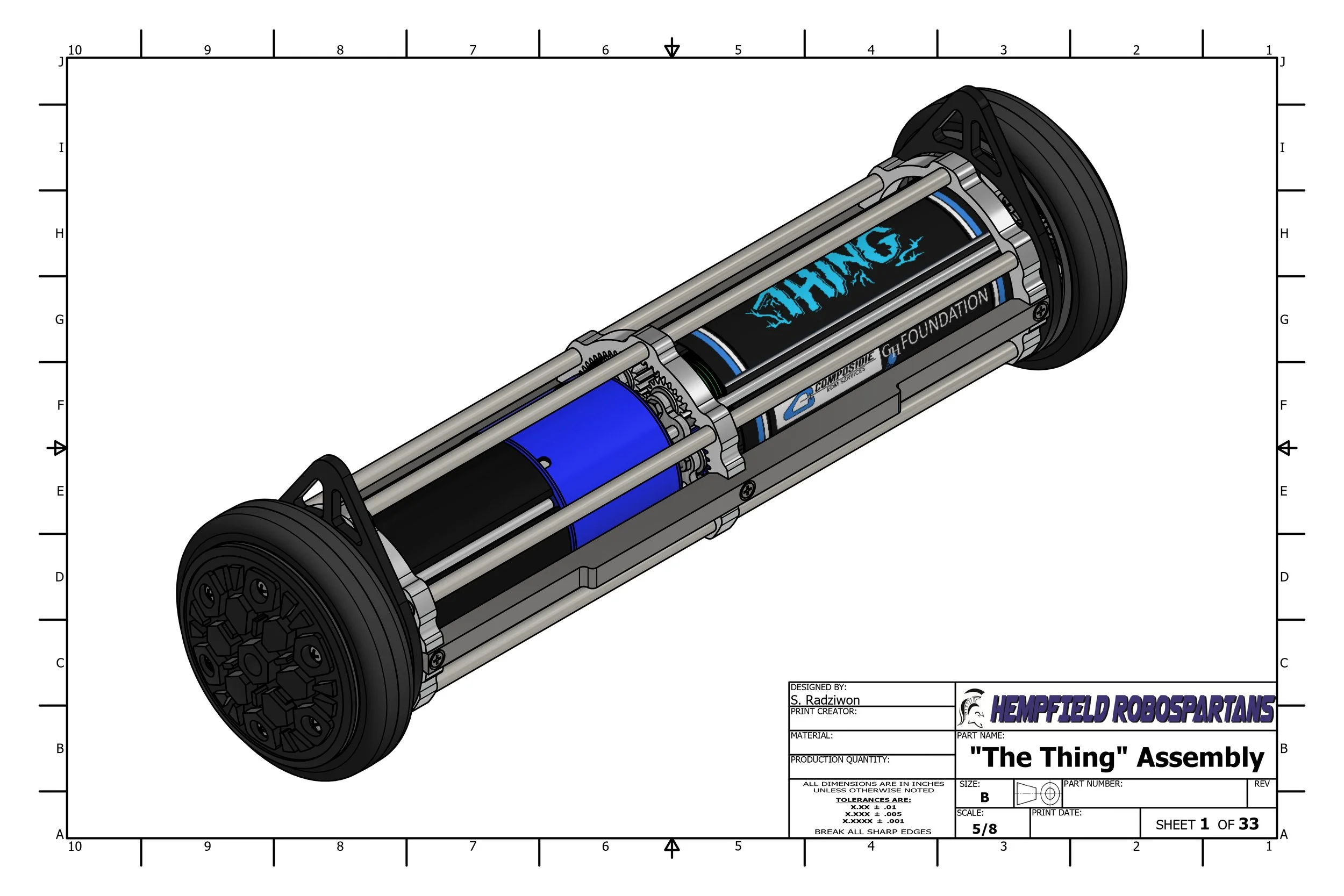
The Thing was unique being the first fully body spinner in the league at that point. Its weapon was a steel, titanium, and aluminum cage that covered the entire body, except for the wheels. This gave most of the bot active armor, and protected it completely against wedge bots. This made it the weapon with the largest moment of inertia my team had ever tried, which was intended to lead to bigger hits.
An unintended side effect of this design was its ability to spin on a dime, essentially making it a horizontal spinner as well. This combined with the spinning of the weapon allowed it lift up onto one wheel and even balance on it.
All of this posed significant technical challenges, including driving the weapon with internal gearing, routing wires, mounting hardware, and balancing weight with impact resistance. This was managed by intense prototyping and modeling as well as testing different iterations at each stage of competition.
At Competition
The Thing’s unique design made its actual competitive performance fairly unpredictable as there was no point of comparison. It managed to get through its first 3 matches, but was knocked out by the junior team’s robot. This was partly intentional, because theirs was expected to have a better overall chance.
Overall, the bot performed better than most people expected, and received the award for Most Innovative. The junior team received the award for Best Documentation, and the senior team placed just below them, with a near perfect score.