Bermuda
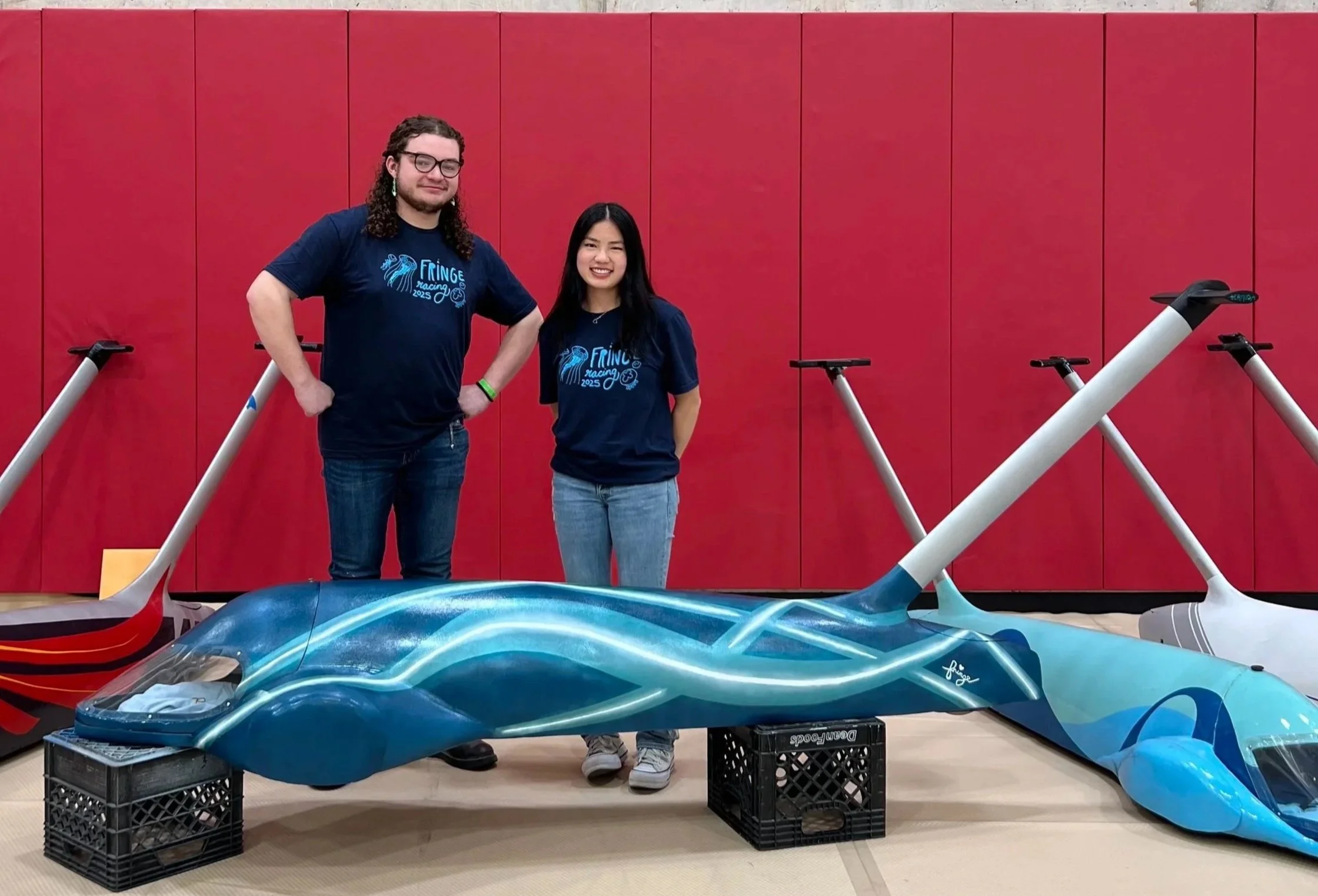
Bermuda was the buggy I built with my Co-Head Mechanic, Abbey, to race for Fringe on Raceday 2025.
Some Context:
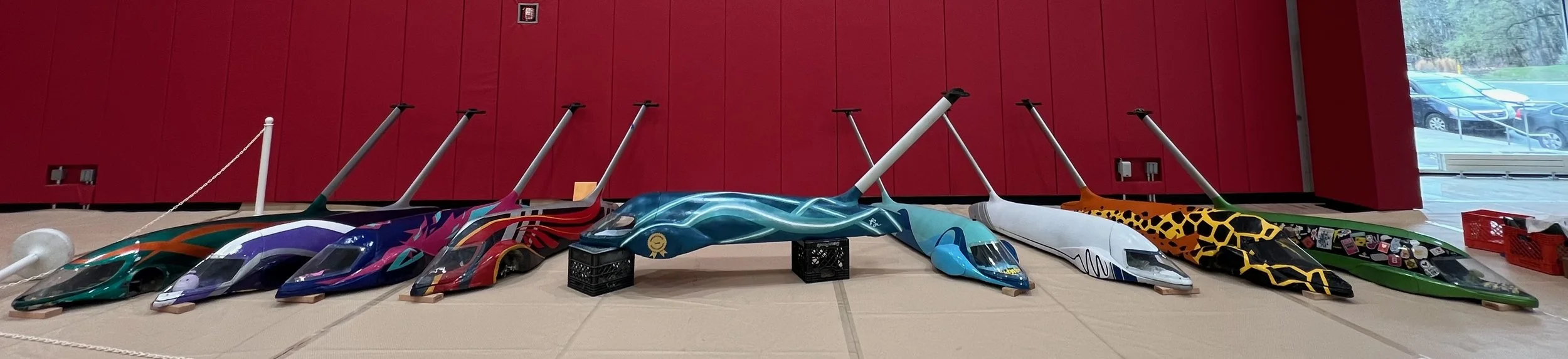
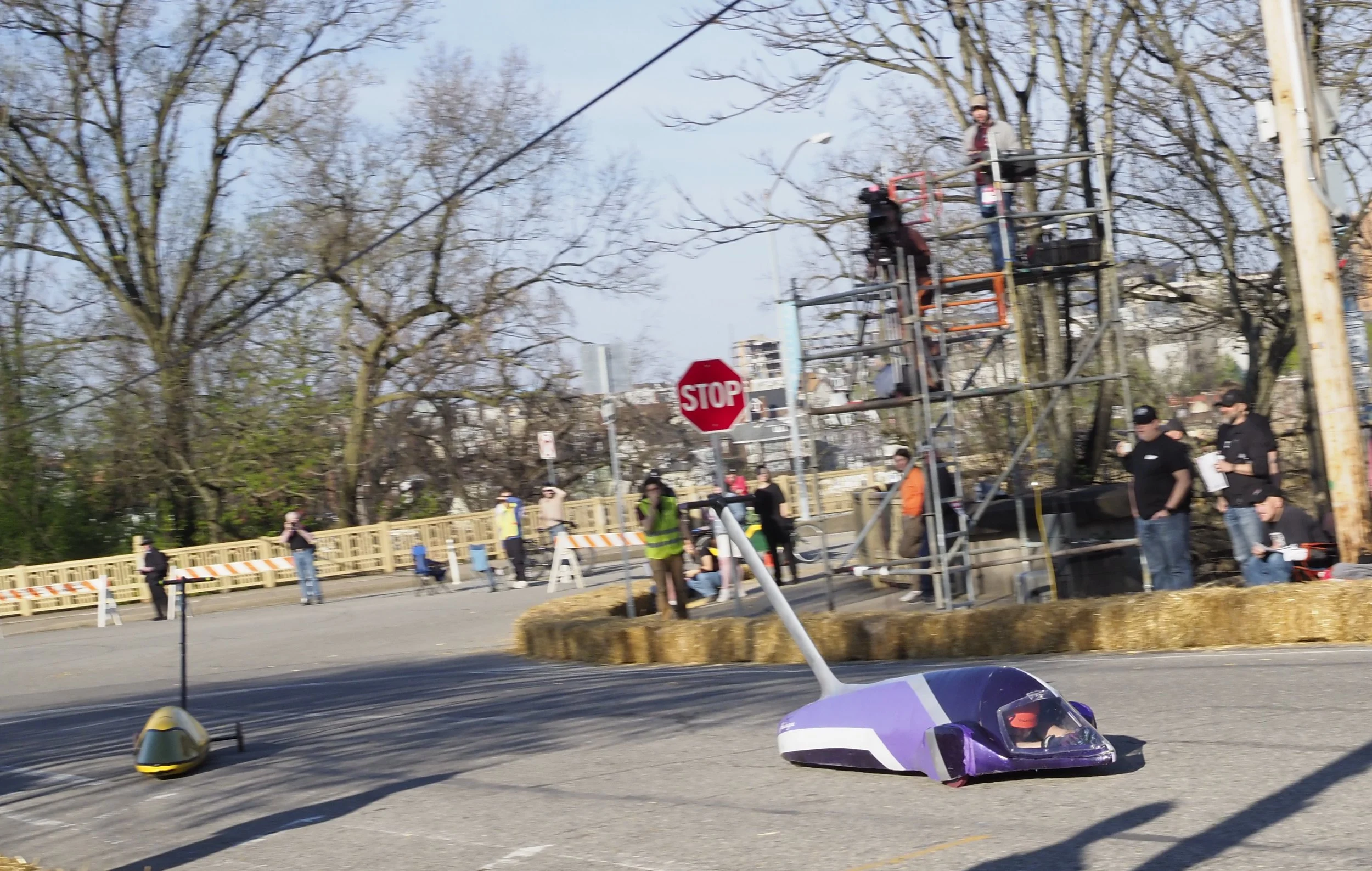
Buggy is a Carnegie Mellon tradition dating back over 100 years. Teams, both independent and from greek life, construct and race small vehicles over a 0.8 mile course near campus. These vehicles, or “buggies,” are pushed uphill and roll independently down hill, powered solely by gravity and momentum. They are propelled up hill by 5 pushers, each with a designated section of the course. Typical buggies are tear drop shaped and low to the ground, with a “push-bar” extending up and out towards the rear.
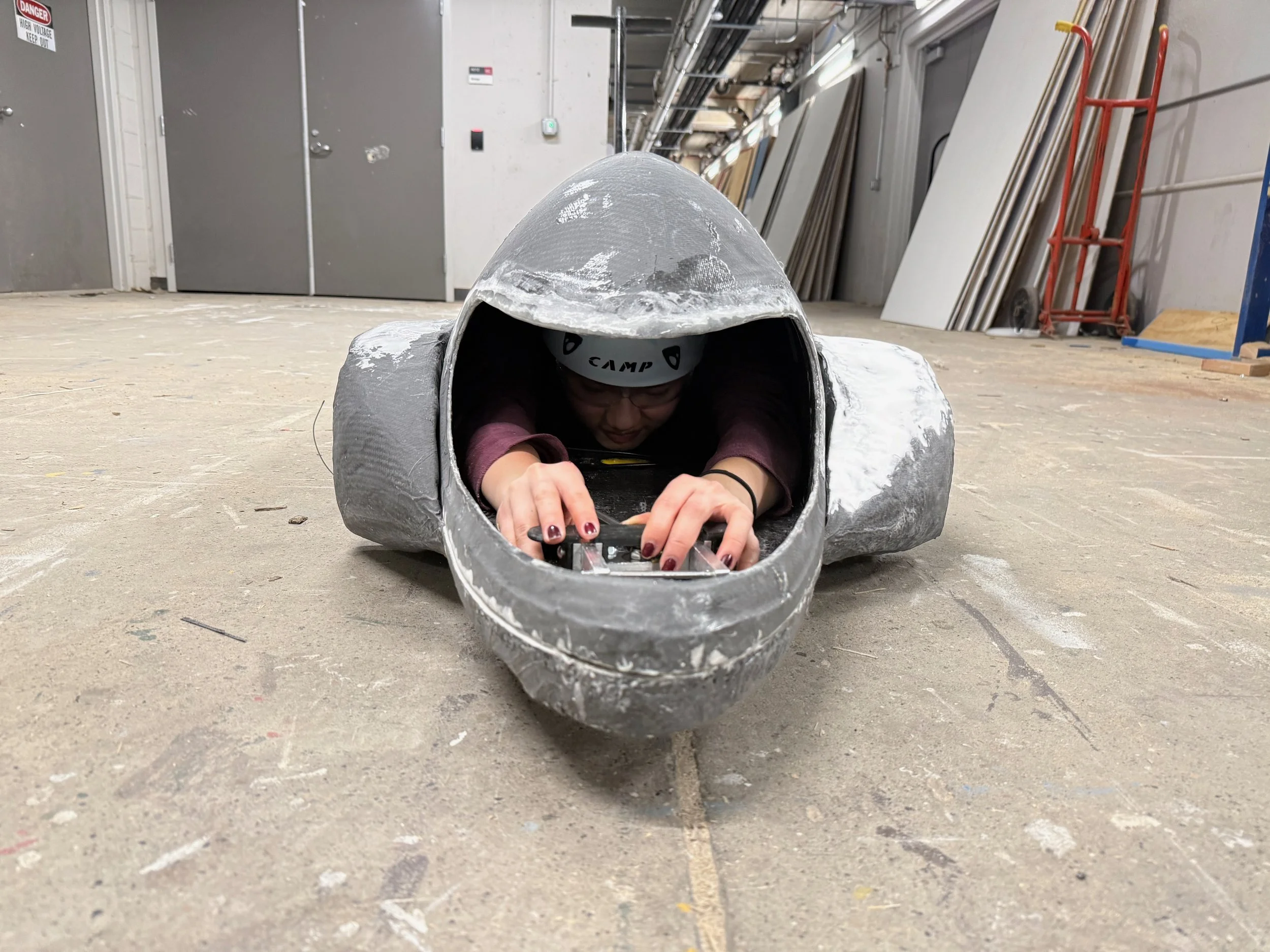
Buggies are controlled by a driver, who must steer and brake as necessary to make it through the course. They are often lying flat on their stomach with their arms outstretched traveling head first. Drivers are relatively short, with the upper limit at 5’3“. Typically, smaller drivers are seen as more ideal, as they can be easier to fit into a buggy.
Modern buggies are composite based, with some rigid structural elements at key locations. These composites are typically made of carbon fiber, though some older buggies still use fiber glass. Core materials vary based on design and the preference of the team fabricating the vehicle.
All current racing buggies are 3-wheeled, and are separated into forward trike and reverse trike. A forward trike buggy has 1 wheel in the front and 2 wheels in the back, while a reverse trike has the opposite configuration. This is one of the most major design considerations because it defines steering design and weight distribution. Teams rarely change making it a major indicator for who made the buggy.
What was the goal?
There were two goals for this buggy and racing season. One goal was to rebuild the base of organizational knowledge that was lost during covid and the recruitment slump that followed. A lot of our techniques were passed down primarily through hands-on teaching and oral tradition. Fringe had been able to pass down knowledge like this, because it was the only organization to build a new buggy every year.
The other goal was to bring the cost of building buggies back under control. After covid, the buggies built after covid were wildly over-budget, sometimes double their expected cost. This was because parts that were once made in house started to need to be out-sourced, poor choices in material, and fixing some mistakes. This led to a push to redesign components, manufacture parts in house, and modify the process to keep costs down.
What was the solution?
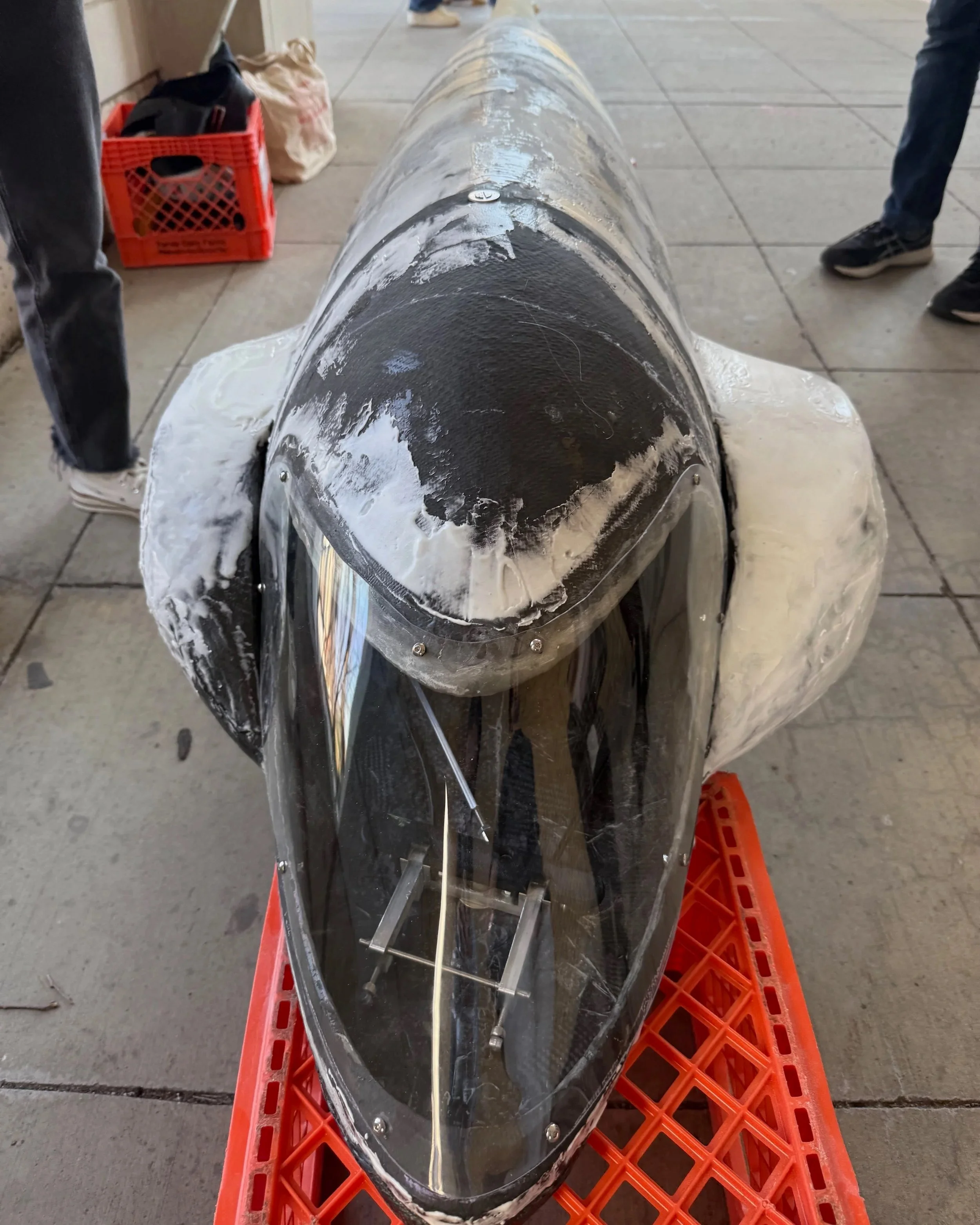
To achieve the first goal, we did significant research to validate our assumptions, and fill in the gaps where things didn’t make sense. An examples of this was epoxy additives. In years prior, we used glass microspheres and kevlar pulp as additives for epoxy, but with minimal reasoning behind it and incorrect ratios.
This year, we learned why, when, and how to use them. Using glass microspheres as an example, which we use to thicken, lighten, and improve the sandability of epoxy for bodywork. We had been using a ratio of about 1 fl of epoxy to about 1/8 of a teaspoon of glass microspheres. This did effectively nothing. The correct ratio, is chosen based on the desired consistency, ranges from 1:1 to 3:1, in favor of more microspheres. This was responsible for about a 15% weight reduction compared to the previous year and a significantly easier time surfacing.
To reduce the cost, we brought all manufacturing in house. Our front frame, which we had previously made of solid steel welded steel cost about $2000. We redesigned this to use a carbon fiber tube and steel ends. This reduced the cost to sub-$100 and a few hours of our time. Other parts could be directly manufactured in house, with material we had on hand.
We also decided to switch epoxies from a more complicated, industrial facing formula, to a more consumer oriented, easier to use formula we had used many years prior. This saved time and money, as well as avoided the issues recent buggies had had with expired chemicals.
How did it go?
Ultimately, this buggy did achieve its goals. Its total operational cost was just shy of $6,000 compared to the $13,000 spent the year prior. The in-house parts matched the quality of those professionally made. The final finish of the Bermuda was significantly better than the other post-covid buggies, it was smoother, stronger, and its parts fit together much more cleanly.
This buggy came in 4th for Design Competition, which is the engineering presentation award. This is a reflection of prioritizing the construction of the buggy over presentation preparation. I stand behind this decision. While it cost me the trophy personally, the knowledge gained set up the next year for success. It allowed those head-mechanics to focus more on presentation preparation. The following year’s buggy placed 2nd.
In actual racing Bermuda, placed 3rd for All-Gender and 5th for women’s.