The Plastic Recycler and Injection Molder
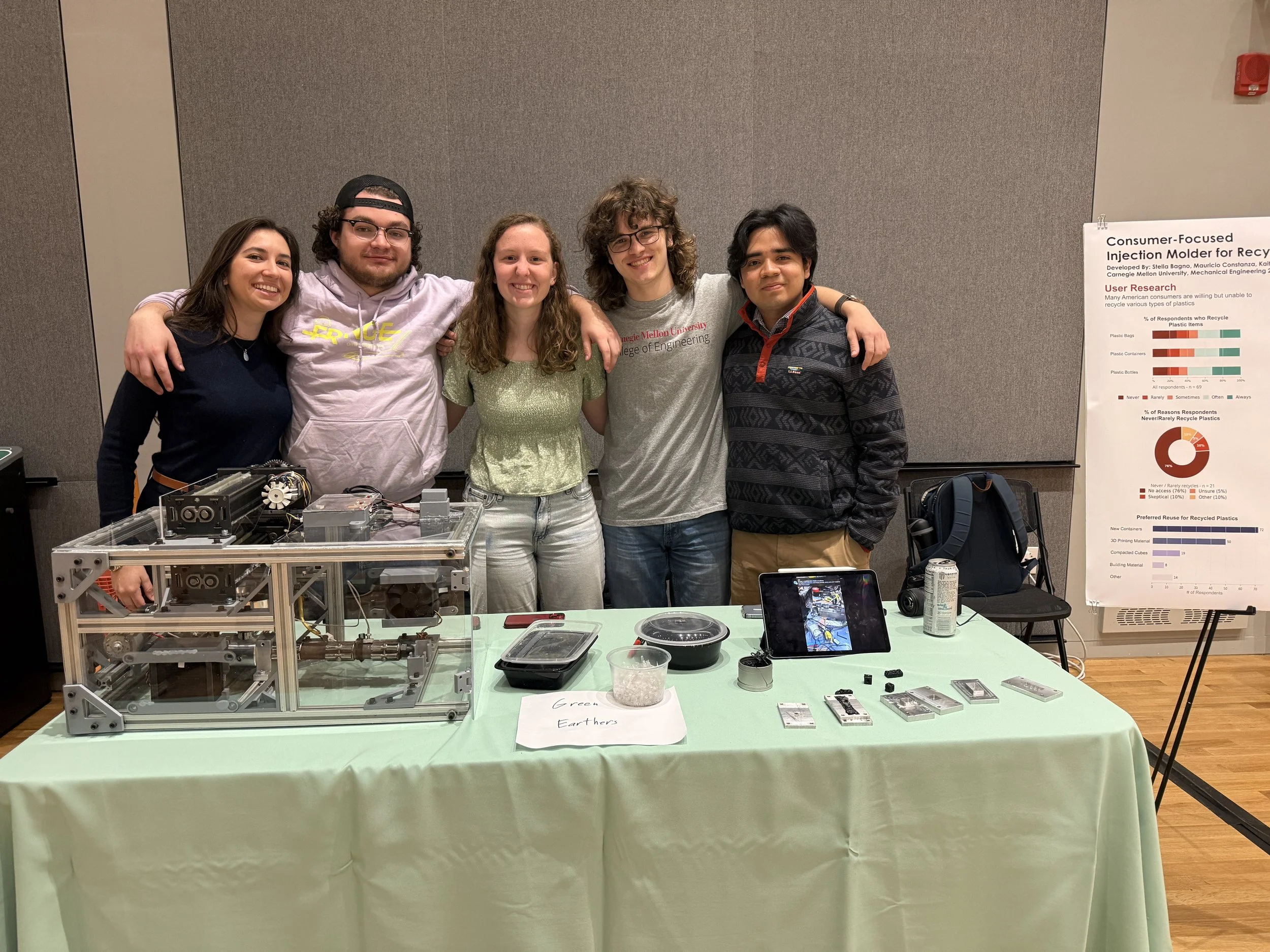
This was my capstone project for Product Development, taken Spring semester 2026 and taught by Chris McComb. This project was completed by 5 students.
Background and motivation
The goal of this course was to find a “Product Opportunity Gap” to fill based on market research. We started with the goal of making something to allow consumers to recycle at home. From there we conducted a user survey to determine what features, target products, and materials would be of most interest to consumers.
We started looking at paper products, but we found that it was already well recycled and had limited options for useful final products. We then moved to plastics as they are more versatile, and are poorly recycled in most municipalities.
We looked at processing different recyclable plastics through a variety of means, including vacuum forming, thermo pressing, and injection molding. We made a few low fidelity prototypes to look at the feasibility of each method. We ended up selecting injection molding as it showed the most promise for automation as well as consistency and variety of final products.
Design and Testing
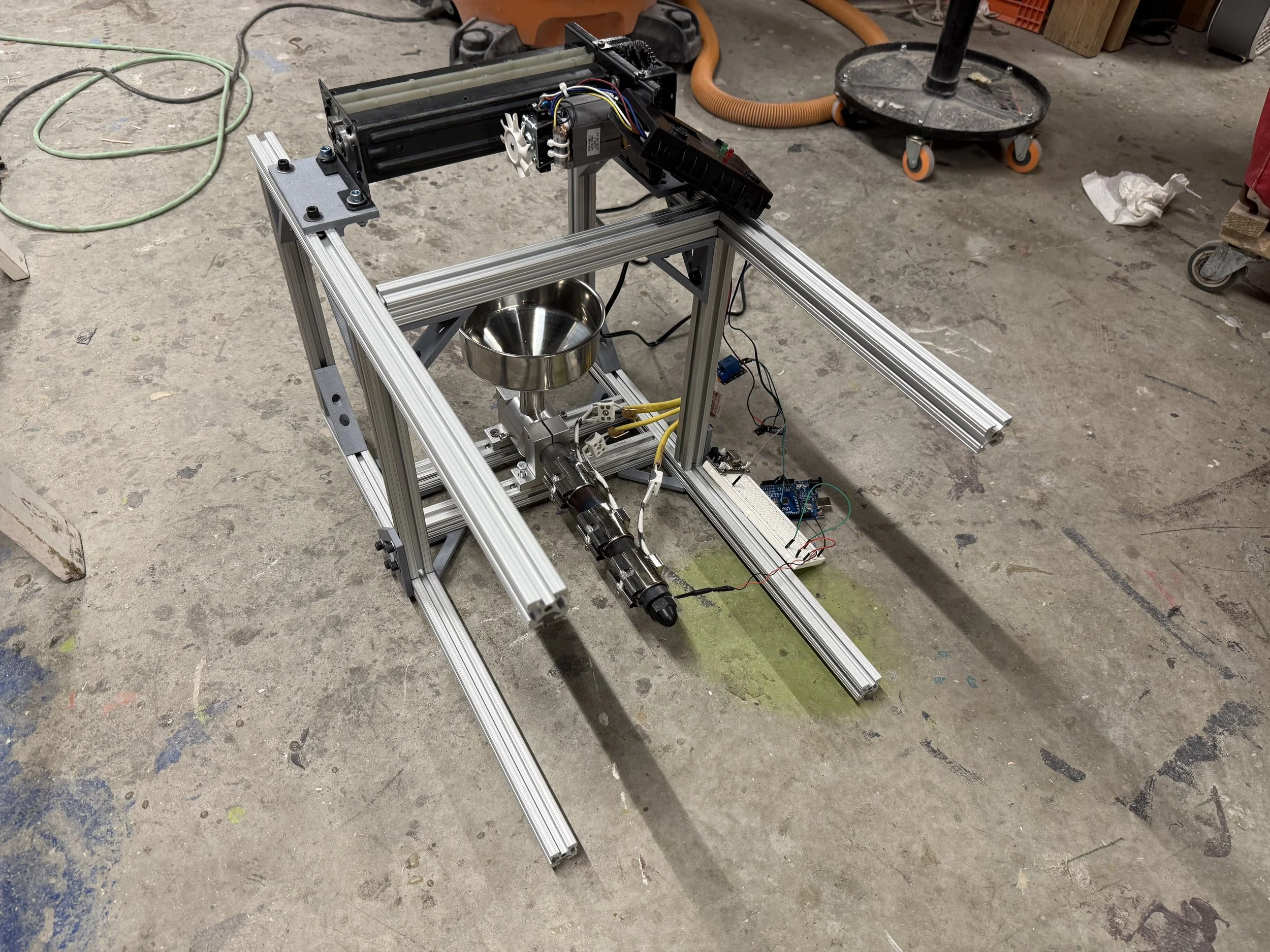
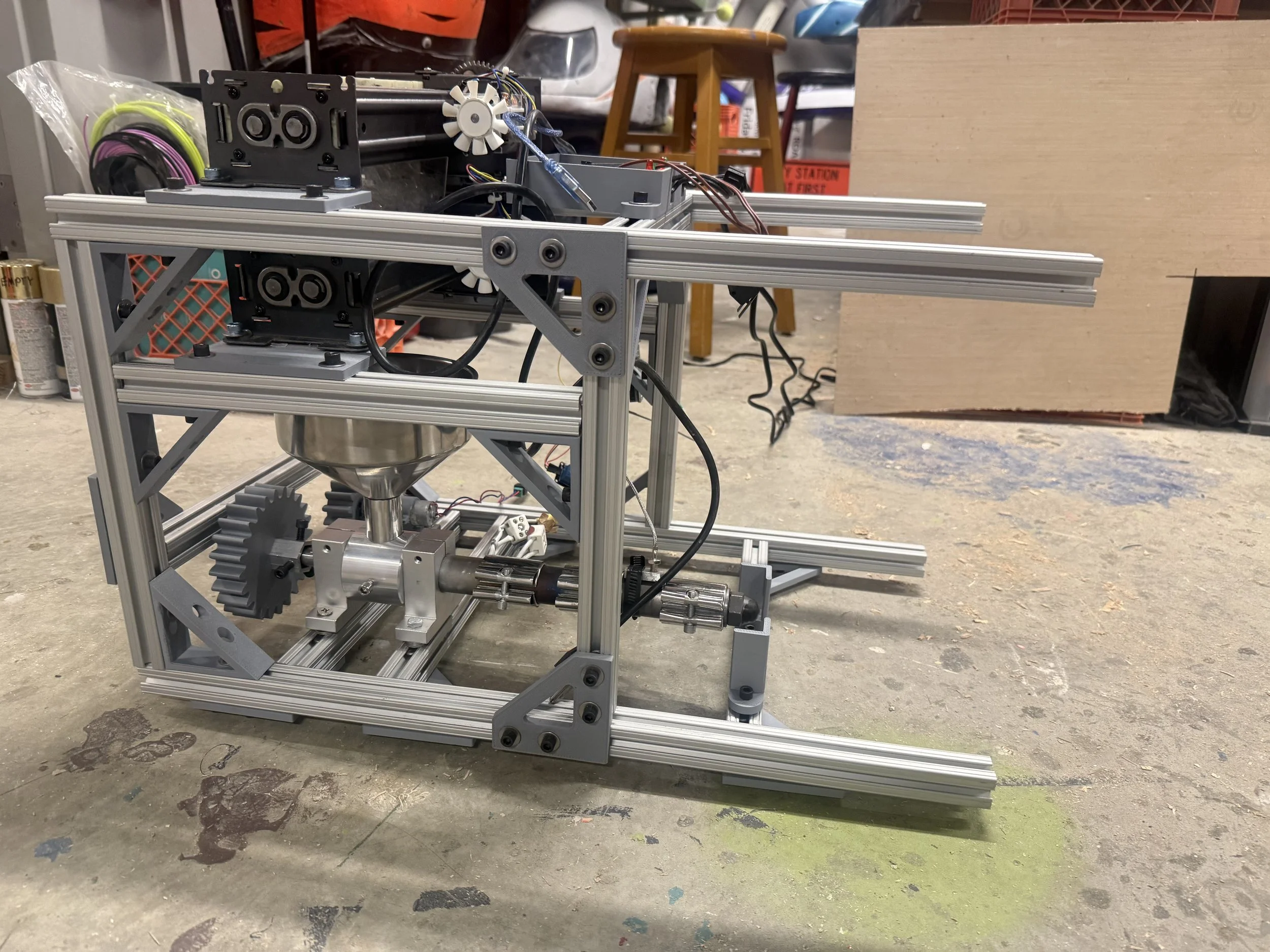
Once we had settled on injection molding, we built a proof of concept prototype using off the shelf components. This prototype used an off-the-shelf plastic extruder, ceramic band heating elements, and the mechanism of an office paper shredder mounted. These components were mounted to T-slot rails with 3D printed brackets. CNC’ed aluminum molds were mounted to be pressed to the end of the nozzle. The system was controlled by Arduino reading a thermocouple, and using relays on the motors and heating elements. This prototype was revised twice for structured design reviews over the course.
The changes made between these revisions were based on testing and experimentation. The most notable of which were repeated redesigns of the drive system to use stronger gears and motors, as well as, the addition of a second shredder and refinement of the control system.
The majority of testing was running the system to see if it worked, and where the issues were. For example, the shreds were originally not fine enough to flow through the hopper and into the extruder, so a second shredder was added to reduce them further. Additional testing was performed to compare to goal specifications for loudness, material properties, reliability, etc. These were also simple and were at most averages of multiple trials.
The Final Product
Ultimately, the device did function. It injection molded a few parts reliably, though they were poor quality compared to commercially available ones. This fault likely came down to the lack of a “packing” phase in the injection molding process, the large volume of the parts causing shrinkage, and the plastic cooling before completely filling the mold.
This project was voted “Most Innovative” at the capstone showcase.