The Club Penguin Booth
This is the booth I designed and built as Head Booth Chair for Fringe. This was built for Carnival 2024.
Some Context:
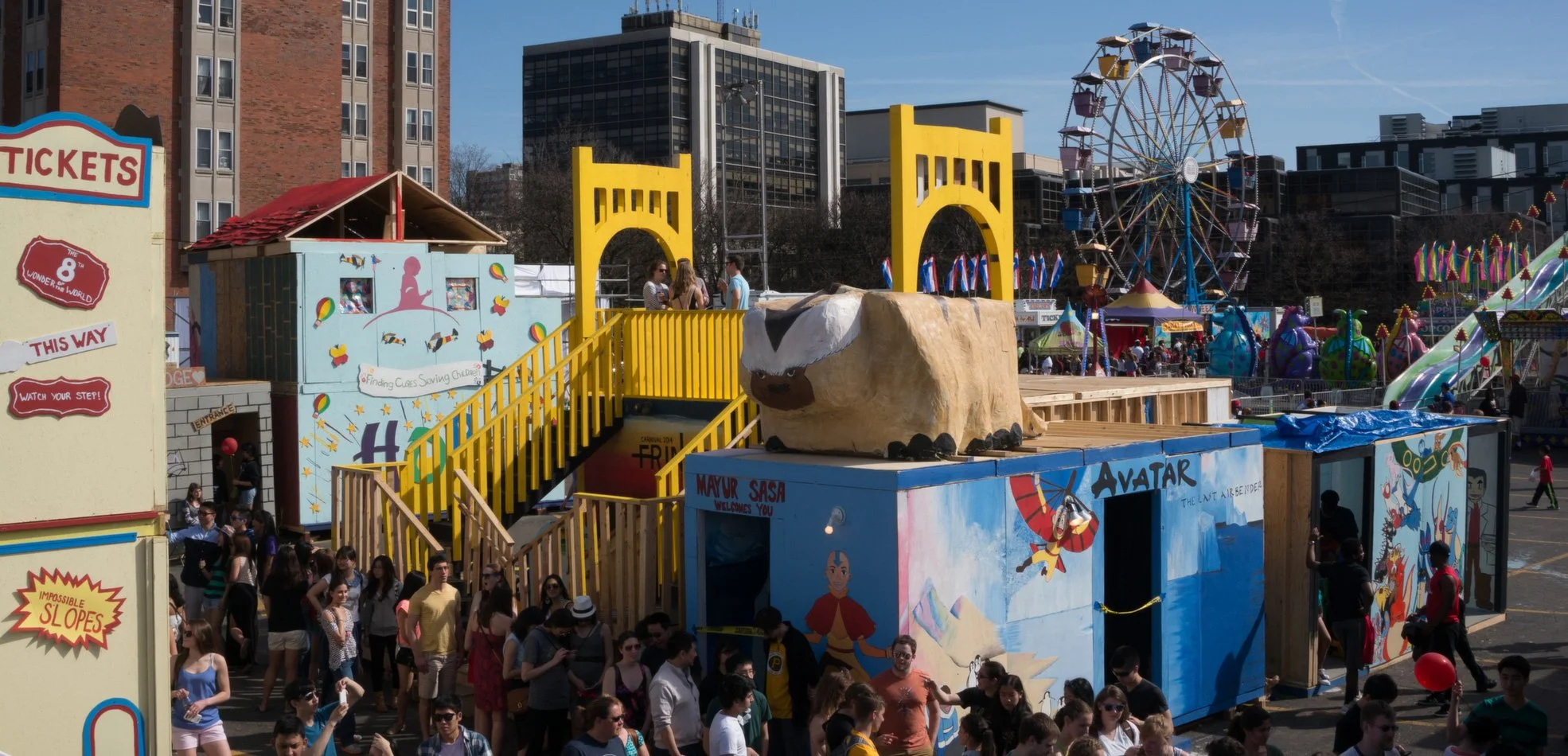
Booth is a part of Carnival, a Carnegie Mellon tradition going back over 100 years. Carnival takes place over a long weekend near the start of April, where Buggy compete, Booths are open to the public, and various county fair style attractions are hired. The entire event is student run and organized. Booths are built by a variety of student organizations including Greek life and independent clubs.
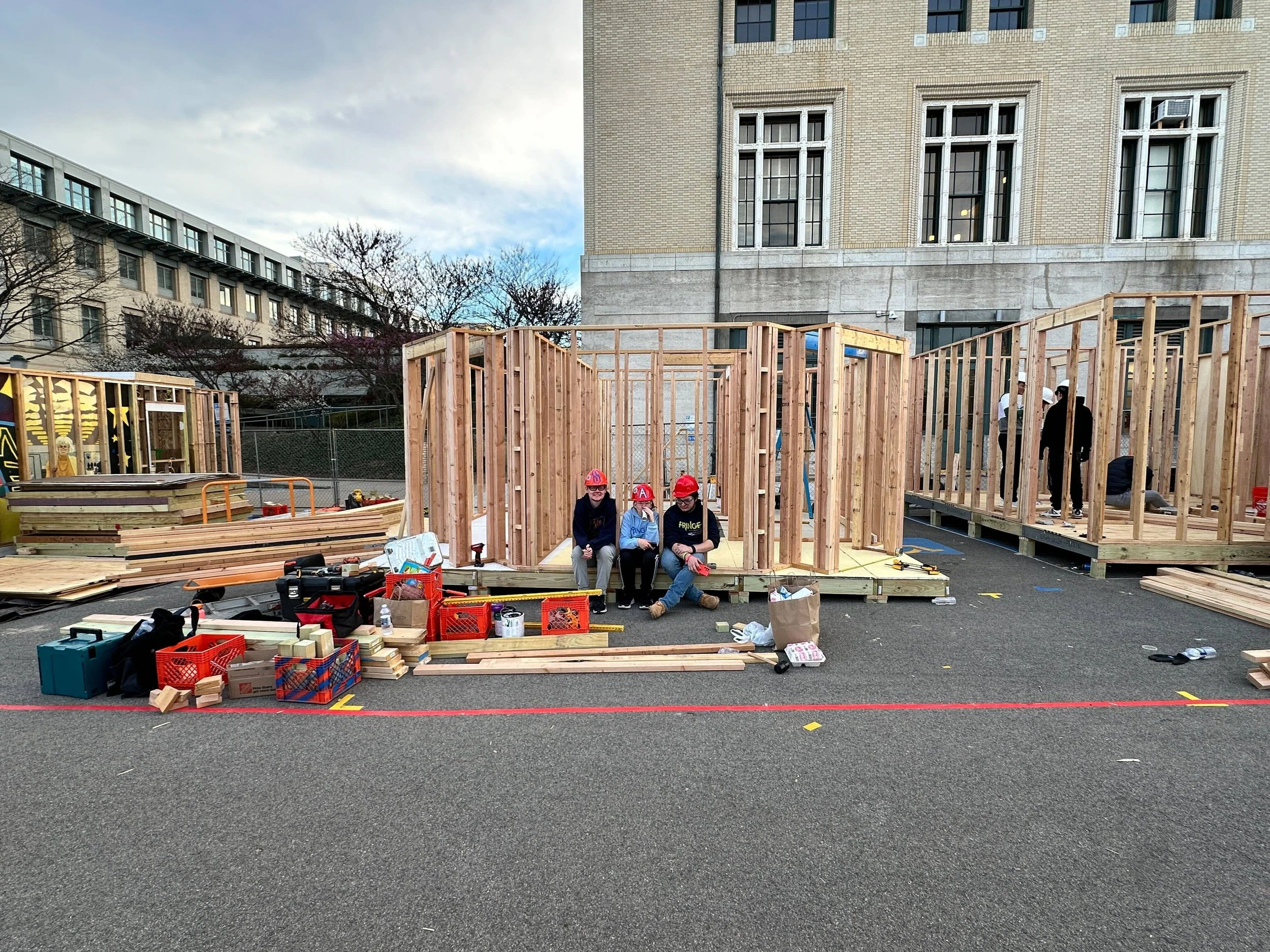
Booths are 18’x18’ wood frame structures, wired with electrical, and themed to fit the overarching theme of Carnival. They can be either 1 or 2 story, and are limited to 12’ or 25’ respectively. They are built to meet university regulations, which are based on the International Building Code, as well as other local and national codes. Booths must submit a set of documentation which include their design, framing, wiring diagrams, plans for moving material on & off site, as well as environmental impact. These plans are submitted for review by the student oversight committee, as well as university health and safety, carpenters, engineers, and electricians.
As part of their theming, they are filled with art, including murals, 3D props, and the occasional complex installation, such as a water feature. They also include some interactive element, often a game, and must give out a prize.
The booths are designed between October and December when the first plan review occurs. After that, booths are fabricated in sections, typically individual wall frames and art pieces. These are all transported to site on the Friday prior to Carnival, with construction beginning late that night. This continues for about a week, until booths open to the public early Thursday morning. On Sunday the booths are dissembled and returned to storage for materials to be reused the next year.
What was the plan?
This year was a unique challenge for a variety of reasons. Due to poor recruitment the year prior, and the graduation of experienced students, I was left as the sole club member with any experience with Booth. This led to the smallest and least experienced team in recent memory for my organization. Being so small and inexperienced meant that if this year failed, or if the club took a year off, it would very likely not do booth again for a long time.
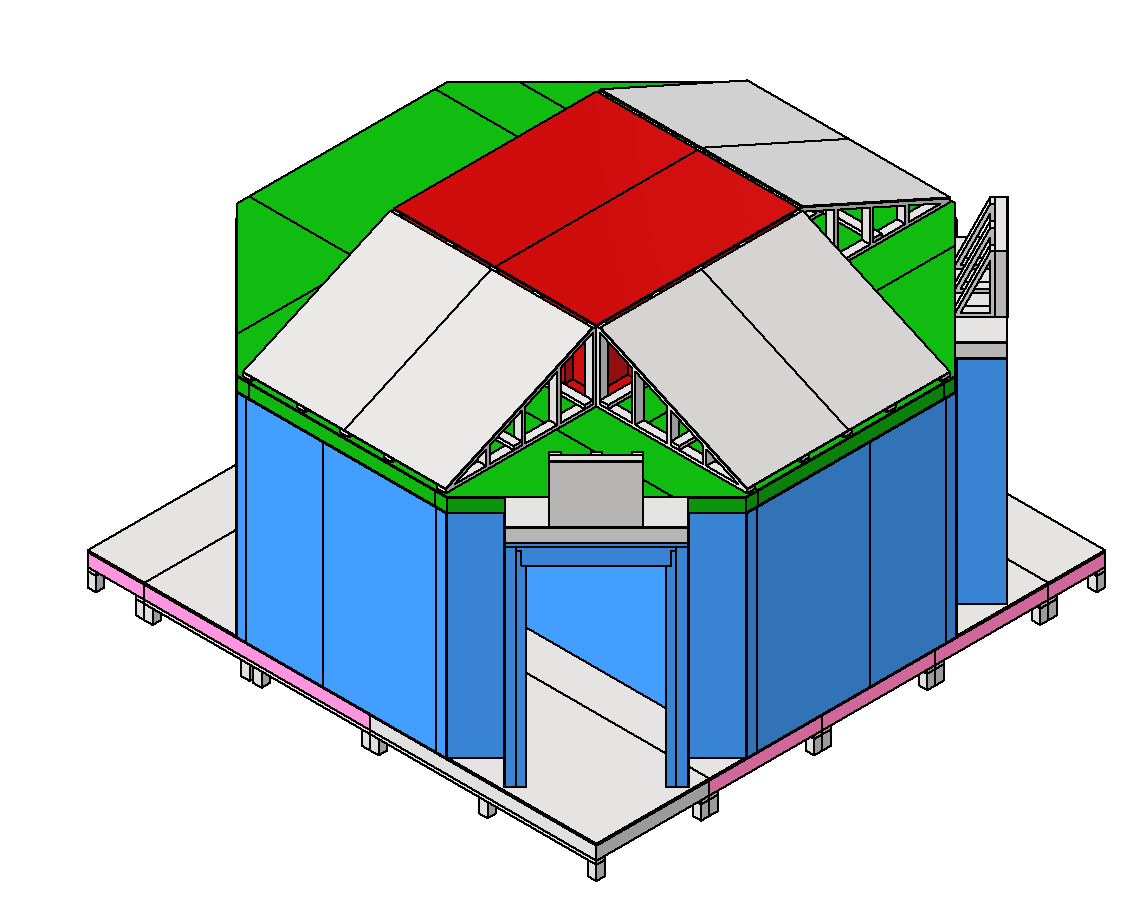
The other challenge was the need to try to live up to my club’s long and proud legacy of booths. This led to a fairly complicated structure with octagonal exterior walls, entrance tunnels, a vaulted ceiling, and a sloped decorative ceiling. This led to complex framing which was challenging to both fabricate and design. This required many rounds of revisions, discussions with university carpenters, and review with architect alumni.
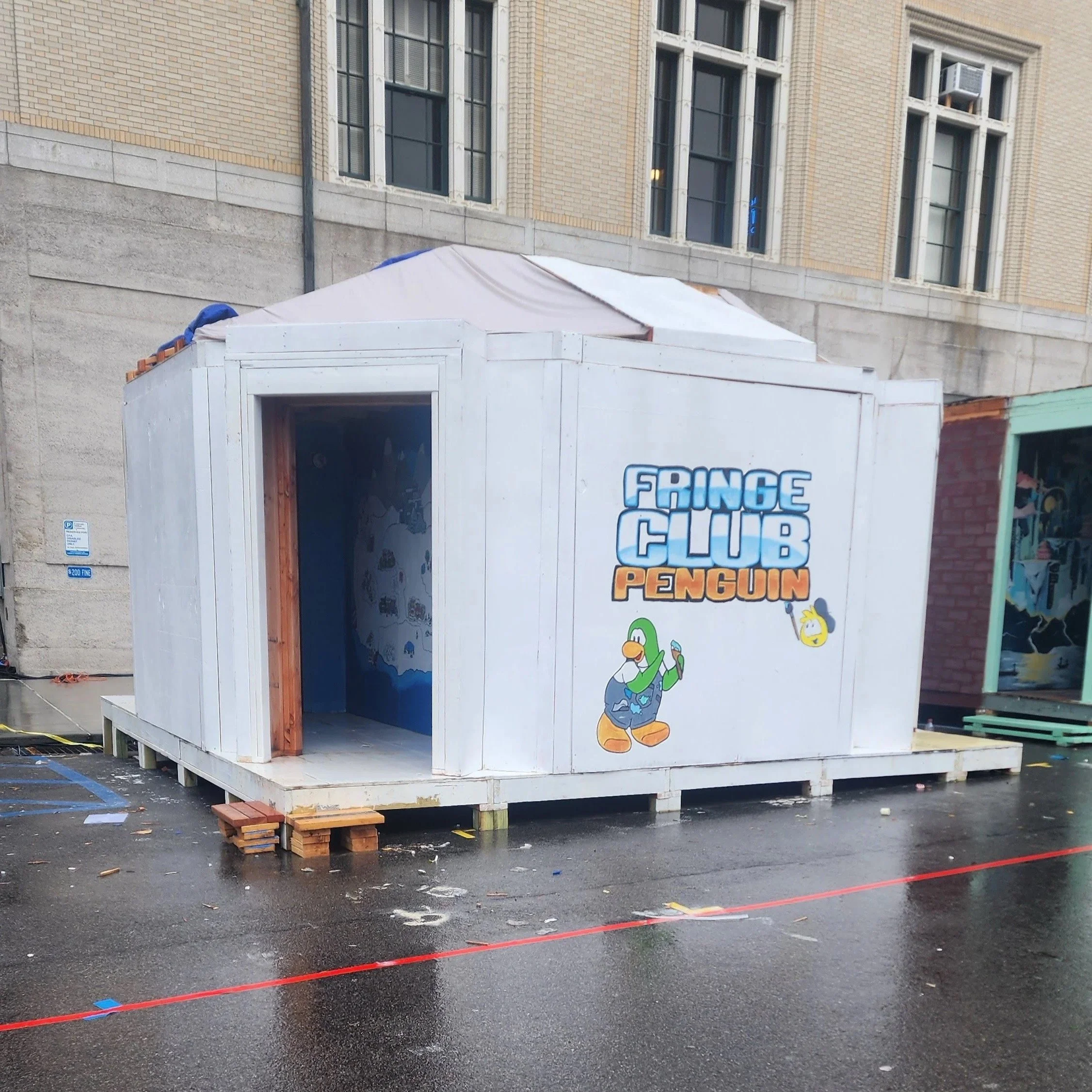
The overall theme for Carnival this year was “Arcade” and the theme of this booth was “Club Penguin.” Club Penguin was a multiplayer online flash game from the early 2010s. The goal of the structure was to appear like an igloo.
How’d it go?
The main victory of this booth was it being completed. Every milestone of this booth of this booth was significant, as it passed each structural check off faster than the year prior. With the complex structure this year had a significant amount of heavy rain that slowed progress and presented its own challenges. The constant dampness caused all the plywood to warp considerably which forced pieces out of alignment. Electrical checks had to be done in the rain which caused shorts as components got soaked and delays as we had to wait for power to be restored when the weather cleared.
While this year did not win any awards, the infusion of passionate, hardworking, and now experienced people set up the next year for success. The following year won 1st place for Independent organizations, and People’s Choice overall. This booth was largely credited for saving Fringe booth and the subsequent victories.