Balsa: The Wooden Buggy
This project started out with the desire to drive the buggies I help build. It later became a joke when I was head booth chair. “I’m going to build a buggy to fit me and I’m going build it out of wood, like a booth.” It stopped being a joke my senior year, when I had enough spare time and experience to do it well.
Some Context:
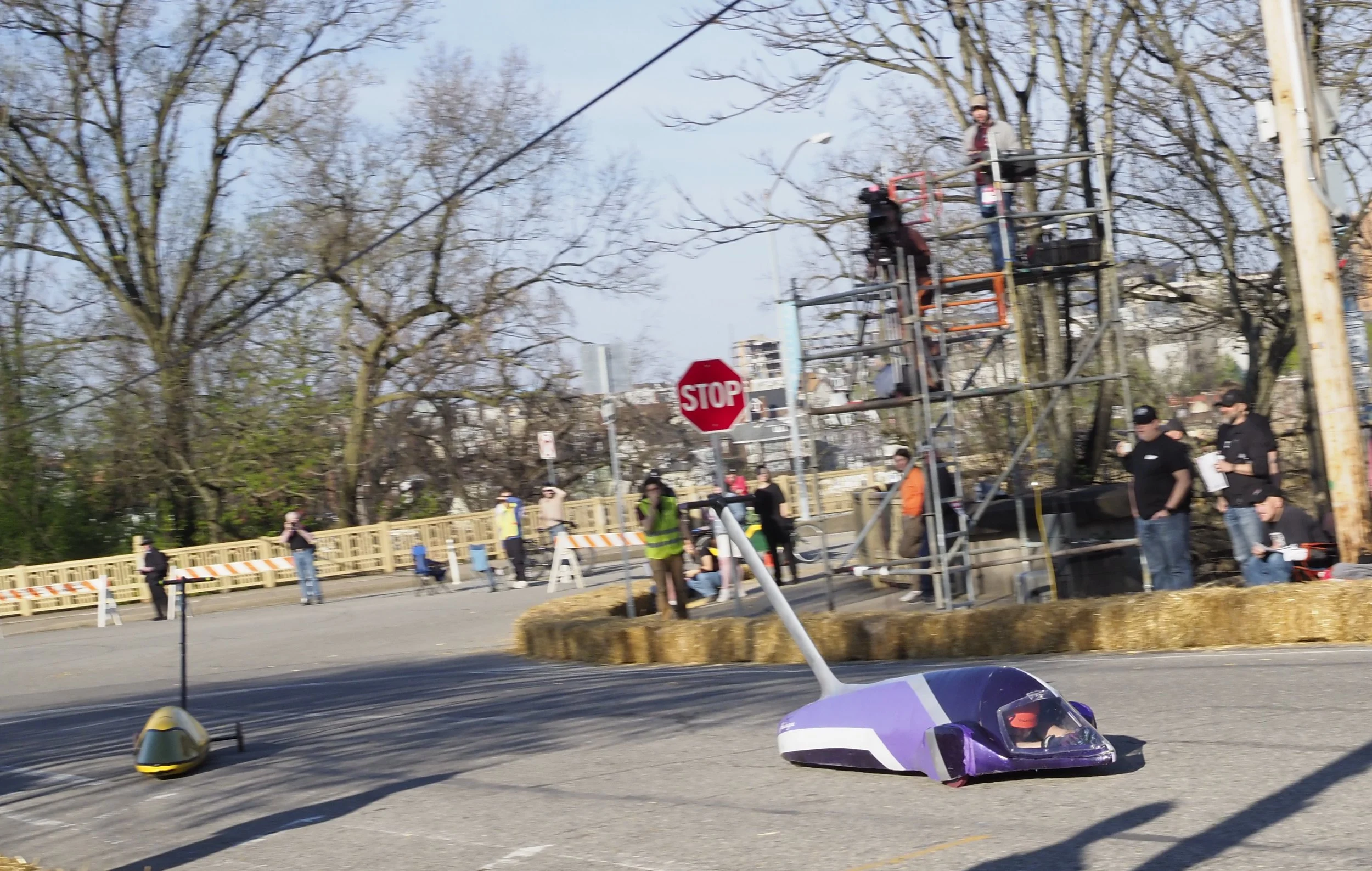
Buggy is a Carnegie Mellon tradition dating back over 100 years. Teams, both independent and from greek life, construct and race small vehicles over a 0.8 mile course near campus. These vehicles, or “buggies,” are pushed uphill and roll independently down hill, powered solely by gravity and momentum. They are propelled up hill by 5 pushers, each with a designated section of the course. Typical buggies are tear drop shaped and low to the ground, with a “push-bar” extending up and out towards the rear.
Buggies are controlled by a driver, who must steer and brake as necessary to make it through the course. They are often lying flat on their stomach with their arms outstretched traveling head first. Drivers are relatively short, with the upper limit at 5’3“. Typically, smaller drivers are seen as more ideal, as they can be easier to fit into a buggy.
Modern buggies are composite based, with some rigid structural elements at key locations. These composites are typically made of carbon fiber, though some older buggies still use fiber glass. Core materials vary based on design and the preference of the team fabricating the vehicle.
All current racing buggies are 3-wheeled, and are separated into forward trike and reverse trike. A forward trike buggy has 1 wheel in the front and 2 wheels in the back, while a reverse trike has the opposite configuration. This is one of the most major design considerations because it defines steering design and weight distribution. Teams rarely change making it a major indicator for who made the buggy.
My past work:
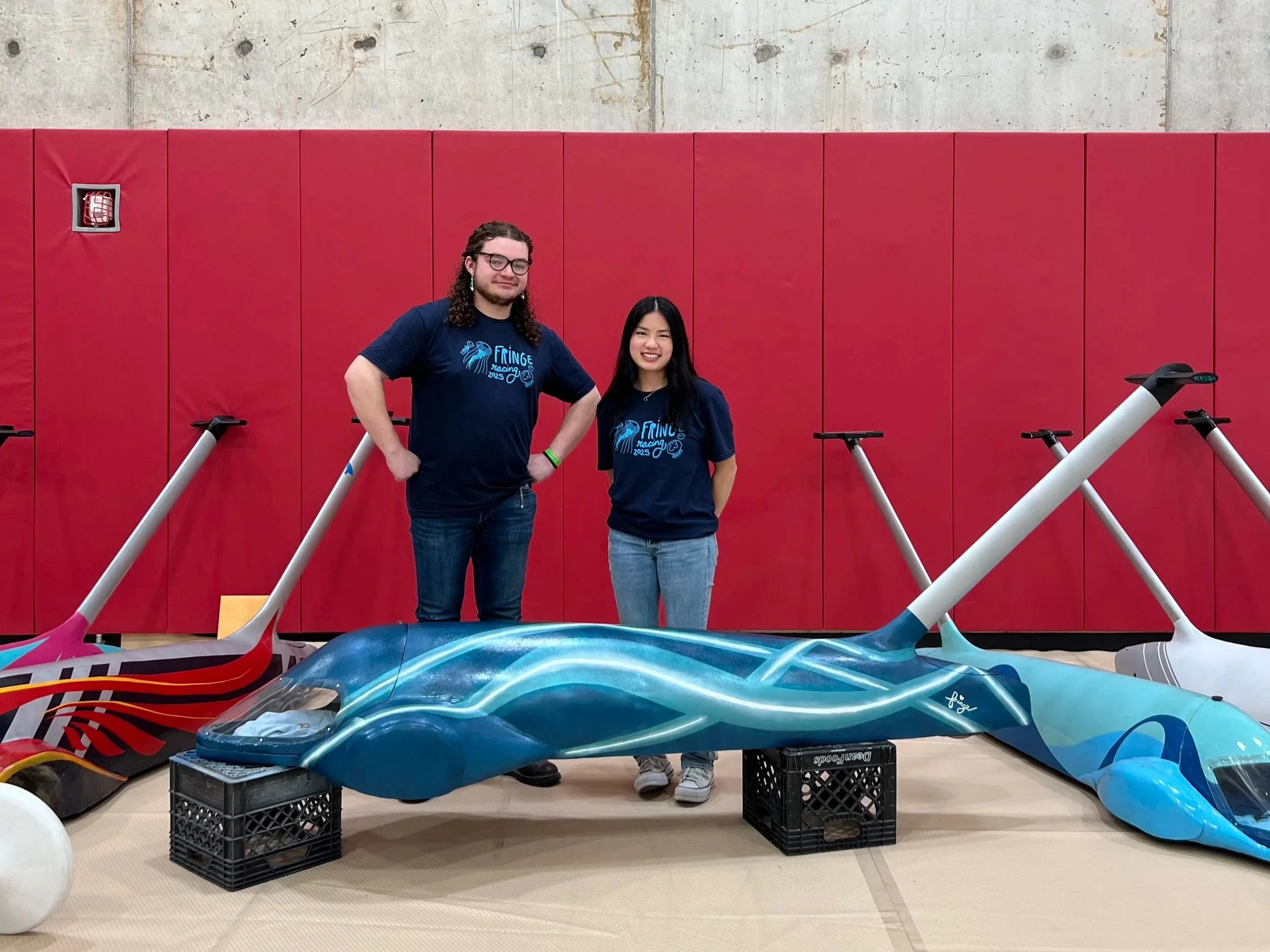
Balsa is the fifth buggy I’ve been involved with. Being part of Fringe, an independent team who builds every year, has given me the unique opportunity to see a relatively large number of builds from start to finish.
It’s also the second buggy I’ve been in charge of making. The year prior I built Bermuda, which was far more conventional in its design and construction. It’s a carbon fiber reverse trike, which I built with my Co-Head Mech for Raceday 2025. It marked a return to form for my team, as it shows our recovery from the knowledge loss caused by covid.
What is Balsa? Why is it different?
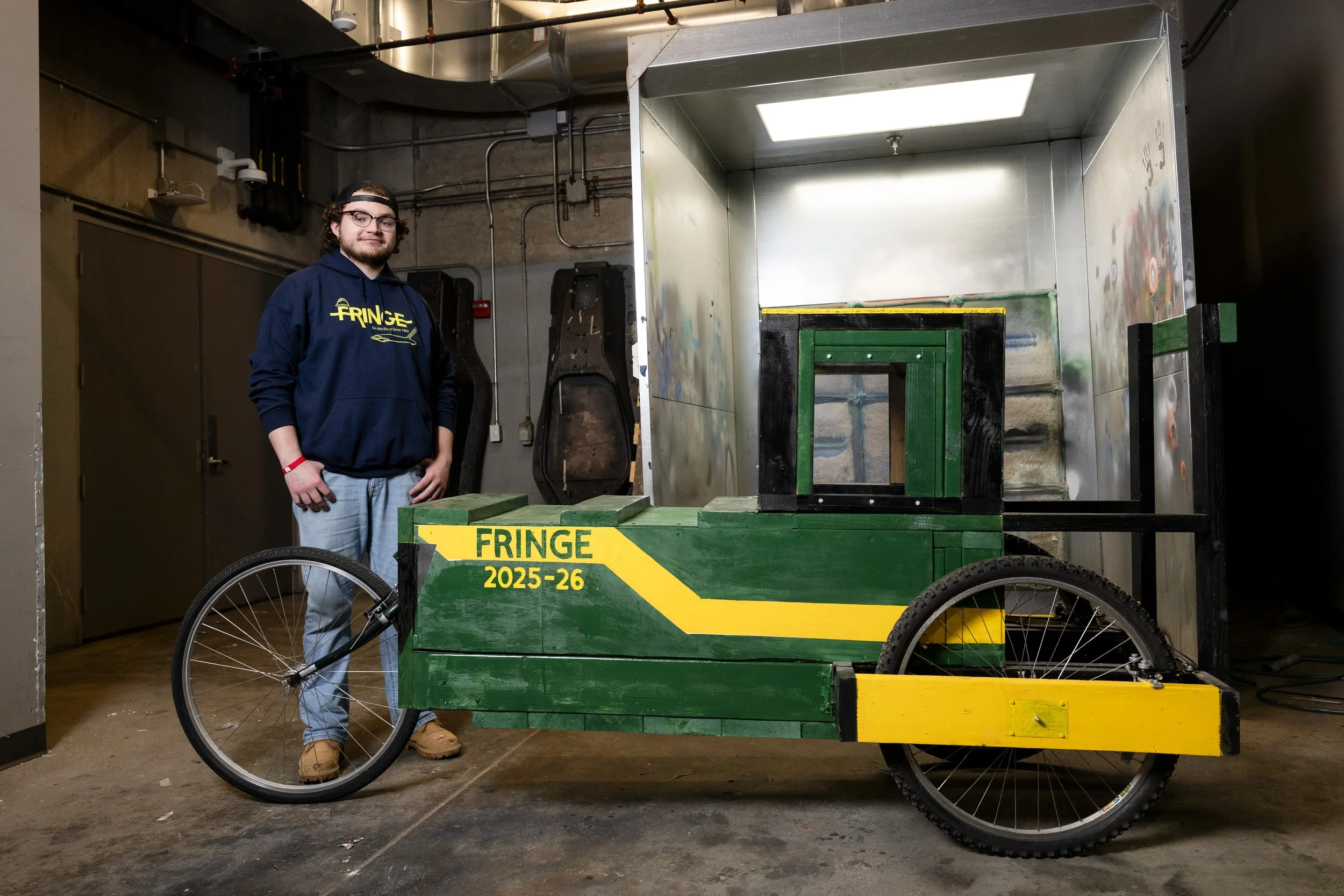
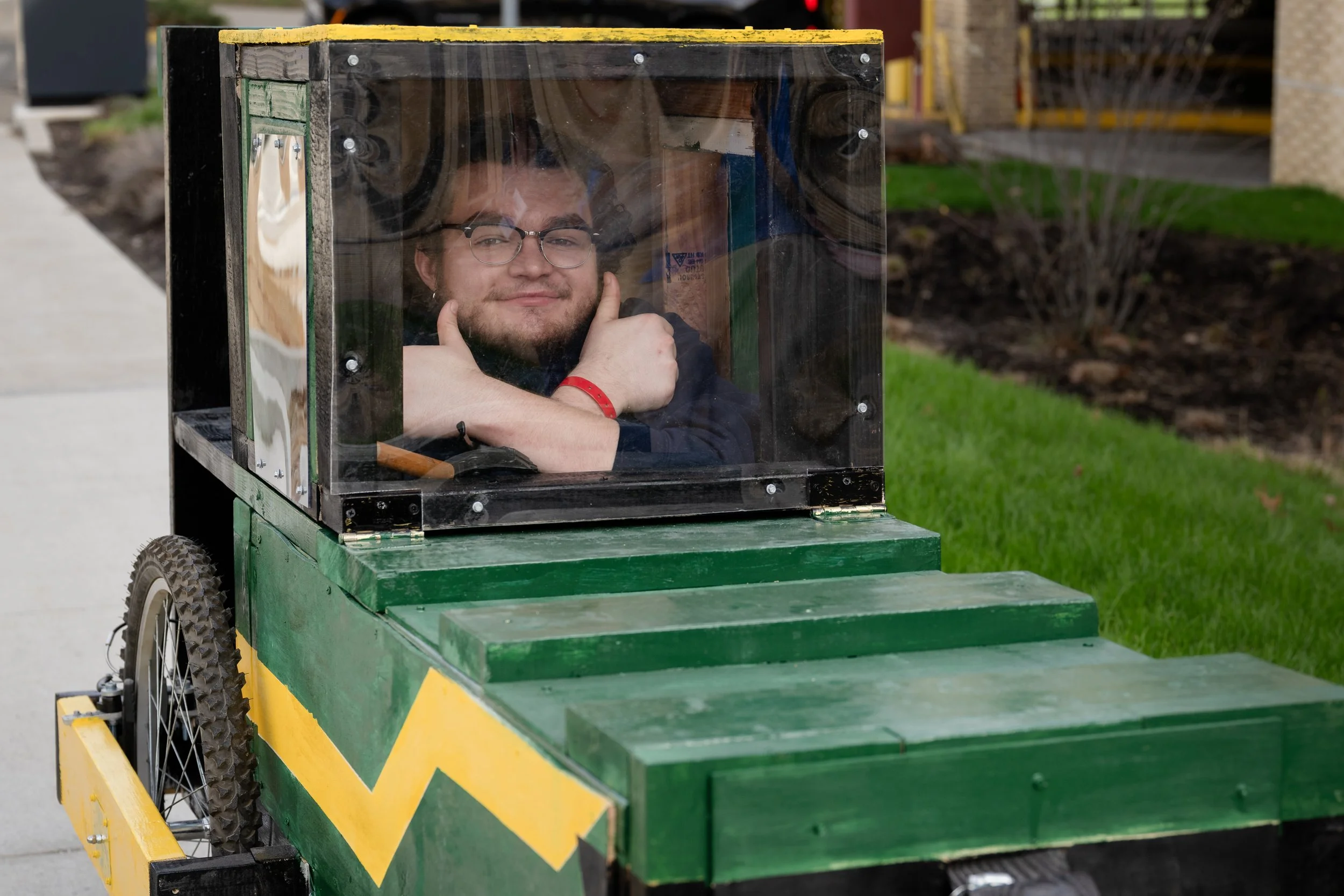
Balsa is a wooden, feet-first, forward-trike, buggy that was built to my dimensions. This breaks a large number of norms in buggy. It’s the first feet-first design to pass capabilities testing and roll on Raceday since 1998, and the first wooden buggy to roll on Raceday since 1993. I’m about 5’9” making me about half a foot taller than all other drivers. It’s the first forward-trike my team has built since 1999. This buggy is exceptionally unique as it uses foot steering, which is not common enough to have been documented over the years.
The overall design of Balsa is based on wood frame construction. Two pairs of 2×6 run the length of the vehicle, and tied together with 2×6 to form the floor and larger structural blocks. The main body is composed of 3 frames made of 2×4, which are then screwed onto the base and are tied together. The gaps in these frames are covered by plywood.
The rear “bumper” ties these beams into the rear wheel boxes which transfer the load into the axels and onto the rear wheels. This connection is reinforced with stainless steel tubes, and steel end plates. These wheels are 26” mountain bike tires which add shock absorption and traction.
At the front, a bicycle front fork is passed through a 4×4. This front fork bolts directly into the original handle bar. This is reinforced with a steel pipe and thrust bearings. The braking system is uses the bike brake on the front fork with its cable extended to put the lever into the drivers hand. The rear brakes use custom machined aluminum mounts and typical bike brakes.